
FOUNDER EXPERIENCE

KORA TECHLABS
Built for Space.
Deployed on Earth.
KORA Sentinel watches the body of a person working in an extreme environment and says what changed, why, and what to do — while there is still time to act. We built it for crews on long missions. The same system now protects workers in mines and oil fields.
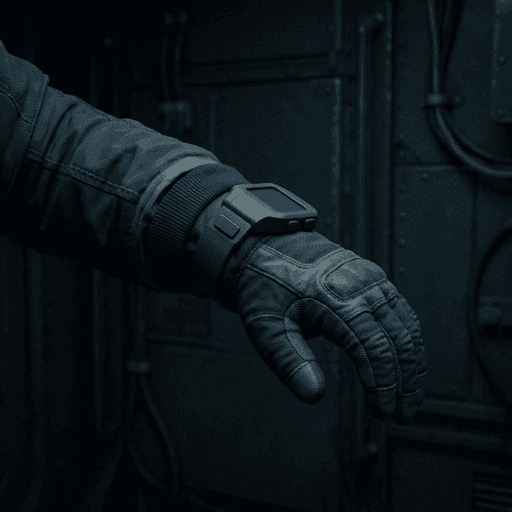
Space
Crew health on missions where nobody is coming.
Physiology, cabin and suit data and the mission itself, read together, with the reason behind every call.

Earth
The same system, on your site.
Miners and rig workers face the same problem astronauts do: remote, extreme, far from care. We treat it the same way.
THE PROBLEM
Most serious incidents start in the body hours before anything shows.
Fatigue
Sleep debt builds across a rotation or a mission. By the end of it a person can be impaired without feeling it.
Cardiac strain
Heat, cold, altitude, heavy work and a pressure suit all load the heart. The warning signs are measurable. They are just not being measured.
No context
A health check sees a person once in a while. A consumer wearable has no idea what job they are doing or what conditions they are in.
KORA SENTINEL
One wearable.
One system.
A person protected in time.
Every reading is compared against that person’s own baseline, not a population average. Context comes from the environment, the vehicle or habitat, and the operation itself. When something drifts, the supervisor or flight surgeon gets a flag, the cause and what to do.

WHY IT MATTERS
$1.54M
Average cost of a work-related death.
National Safety Council, Injury Facts 2024.
14.7%
Of US oil and gas worker deaths were cardiac.
NIOSH, MMWR 2023.
21.5%
Of those deaths happened while working alone.
NIOSH, MMWR 2023.
5.5 pts
Survival from untreated cardiac arrest falls about 5.5 percentage points every minute.
Larsen et al., Annals of Emergency Medicine, 1993.